
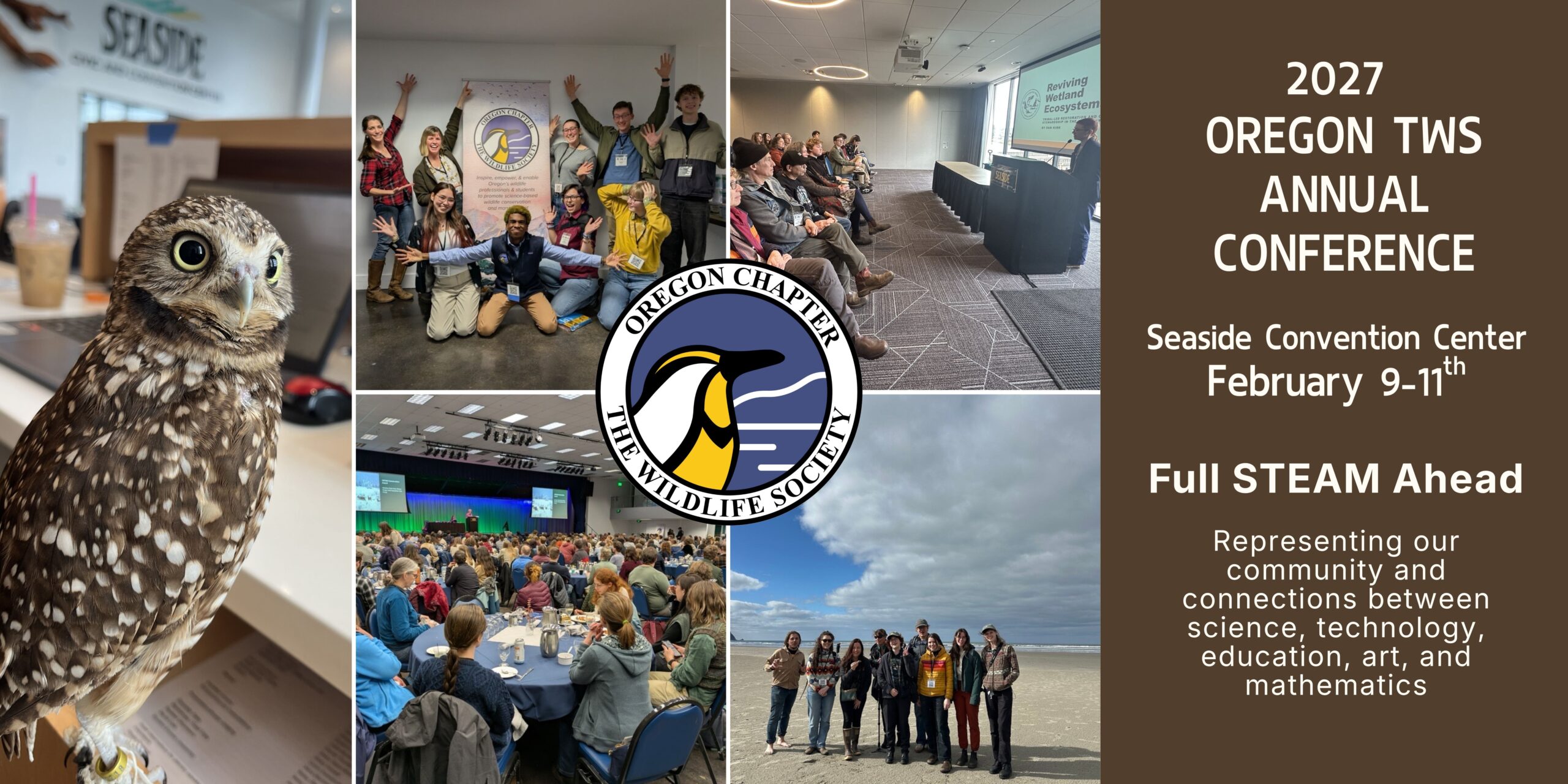
2027 Oregon TWS Conference
February 9-11th, 2027
Please note that printed copies of the full program schedule will not be provided at the conference. A limited number of schedule-at-a-glance copies will be available onsite, so if you’d like a printed version of the full schedule, we recommend bringing your own.
2027 ANNUAL CONFERENCE DESIGN CONTEST
Artists’ are invited to submit a design that represents the theme of our conference and will become the featured artwork for the event.
The upcoming conference theme is “Full STEAM Ahead” representing our community and connections between science, technology, education, art, and mathematics.
All entries must be recieved by December 15th, 2026
The selected design will be used to produce a limited number of conference stickers, which will be available for purchase by conference attendees. The money from these sales will go toward our scholarship and grant opportunities. The winning artist will be recognized throughout the conference and on our website.
We encourage folks from all backgrounds and experience levels to submit your work and help create the visual identity for our 2027 conference. Please click HERE for eligibility, design requirements, available awards and HERE for design submission link.
QUESTIONS please contact Mikayla Bivona Mikayla@ortws.org
CALL FOR INVITED SPECIAL SESSIONS
We encourage submission of special sessions devoted to a single topic or theme. Special sessions at the 2027 Conference should encompass a 2-hour and 40-minute time slot, which can be formatted in a variety of different presentation styles. An invited session leader acts as moderator during the conference, and session organizer ahead of the conference, inviting speakers, organizing speaker order, communicating with the Scientific Program Director, gathering speaker bios, and introducing speakers during the conference. Please note the general call for individual talk abstracts will open November 9, 2026.
ORTWS session types include:
- Traditional Invited Session - A session leader invites 8 speakers to present 15-minute talks with 5 minutes for questions and transitions at the end (Eight 20-minute blocks). The session leader may or may not give a talk, but does introduce each speaker, keeps time, and ensures timely transitions.
- Moderated Panel Discussion - Six individual speaker presentations around a similar topic, developed with a moderator introducing and concluding the various speakers with short ignite length presentations. The session concludes with a 20-minute moderated panel discussion at the end (10-minute intro, six 20-minute blocks, 10-minute conclusion, 20-minute panel discussion).
- Invited Ignite Sessions - A session leader invites 16 speakers to present 7.5-minute talks with 2.5 minutes for questions and transitions at the end (Sixteen 10-minute blocks).
- Flexible Session - A session leader invites a variety of speakers to fill the 2 hour and 40-minute block, mixing and matching the 10 minute and 20-minute blocks. 20-minute blocks should focus on science with results or in-depth management talks, while 10-minute blocks should be shorter, ignite style talks for projects in progress without full results, or quick in the field management type topics. Panel discussions can be mixed in as desired.
Other session types; ORTWS encourages unique and different presentation styles. The above are the most common session types, but we are open to other types of sessions including, but not limited to:
- Collaborative Discussion - Attendees are encouraged to participate in the discussion, led by a moderator and possible speakers, and may be in the form of roundtable topics.
- Point-Counterpoint Panel - Moderated discussion focused on various sides of a topic, which may or may not include presentations.
- Conversation Starter - Moderator is prepared to facilitate an open discussion along a particular topic. They begin with a five-minute intro of the topic or sides of the topic, then open to the audience for interactive discussion.
Want to organize a special session? Please send your proposed session name, session type, and expected number of speakers to abstract committee chair, Cheng Cheng Goy at cgoy@ortws.org. Leaders of accepted sessions will need to send a list of speaker names, talk titles, and emails by November 2, 2026. Speakers in invited sessions will still need to submit abstracts in the general call for abstracts which we anticipate opening on November 9, 2026; each invited special session will be included as a drop down in the abstract submission menu.
Don't have enough speakers for a full session? We can help fill open slots in an invited session with submitted abstracts or provide half session slots. This year we are once again at the lovely Seaside Convention Center which is offering incredible flexibility for breakout sessions. Thus, we can accommodate most requests for invited sessions. While we do not require an abstract for the invited session itself, all invited speakers must submit their abstract through our submission process and indicate in which special session they are participating. We will work with the session organizer for the peer-review process.
Interested in space for a working group or team/agency meeting? We can accommodate you! Please contact Cheng Cheng Goy cgoy@ortws.org or Vanessa Schroeder vanessaschroeder@ortws.org.
2027 SPONSOR PLEDGES & DISPLAY SPACE INFORMATION:
The ORTWS Conference is a three-day event on which includes technical presentations, focused symposia, professional interaction forums, plenary sessions, and student mentoring events. These events provide opportunities for wildlife students and professionals to learn about, discuss, and potentially influence diverse aspects of wildlife conservation and management. Ready to sponsor the 2027 Conference in Seaside, OR? More sponsorship details and display space information coming soon.
♥ THANK YOU TO OUR 2027 SPONSORS ♥




2027 BEVERAGE SPONSORS

2027 PRESENTATION SUBMISSIONS
Call for 2027 Abstracts, Posters and Presentations - Deadline December 9, 2026
We invite abstracts for oral presentations and posters, special session proposals, and ideas for other facets of the program. All topics in wildlife, vertebrate biology, habitat management, conservation, and application of research findings to conservation and management practices are welcome. Click HERE for details!
See Call for Invited Special Sessions section to submit ideas for an invited special session on a specific topic or theme.
The 2027 Annual Conference theme is Full STEAM Ahead: representing our community a connections between science, technology, education, art and mathematics.
QUESTIONS regarding abstract submission or have an idea for a special session? Please contact Vanessa Schroeder vanessaschroeder@ortws.org
REGISTRATION DETAILS & CONSIDERATIONS
- † Grad Student / Early Career: Students currently enrolled in a graduate-level wildlife-related program, or recent graduates with less than 3 years of employment experience in the wildlife profession.
- Early registration deadline: TBD
- Late registration applies TBD
- Non-member rate is TBD, regardless of registration window.
- Additional banquet tickets can be purchased separately for $TBD each. For Awards Banquet attendance only.
- Exhibitor table includes: 8' x 30" table, linen/skirting, chairs, waste basket, optional electrical hookup (+$25), and staffing by one vendor representative. Exhibitor registration does not include access to conference sessions.
During registration we encourage you to Opt-In to the 2027 Conference Mentorship Program during registration - more details coming soon!
ACCOMMODATIONS
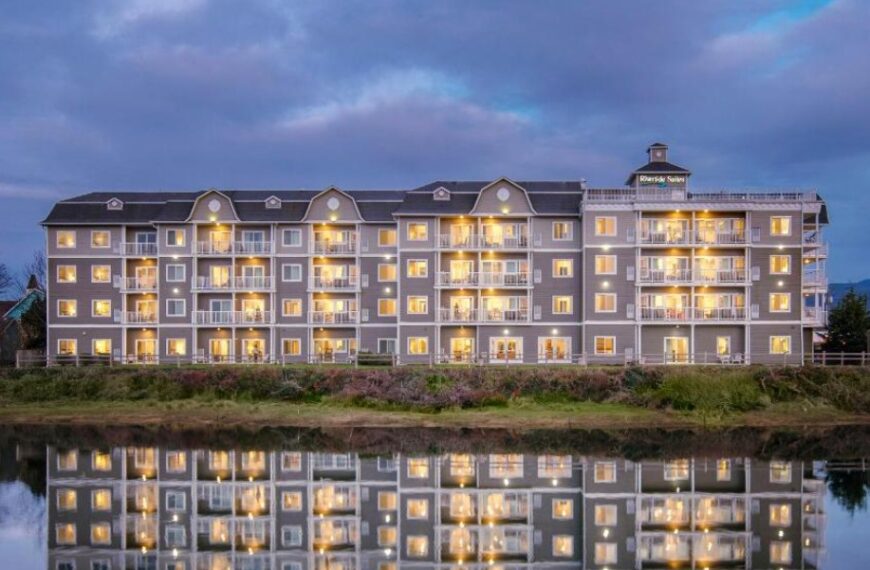
A room block has been reserved for attendees of the 2027 Oregon Chapter of The Wildlife Society Annual Conference in Seaside, Oregon.
Conference Dates: February 9–11, 2027
Hotel: Riverside Suites
Reservation Phone Number:
Conference Rates: We’ve secured special discounted rates for our attendees. Click HERE to view exclusive savings during the conference.
Group Code: insert code
Reservations are available on a first-come, first-served basis. We encourage attendees to book early, as the conference room rate block is limited and the discounted rates are subject to availability.
In addition, we have compiled a list of highly rated local options in Seaside, Oregon to help guide your search for other options. Seaside offers a wide range of accommodations to suit different preferences and budgets—from oceanfront inns to cozy boutique hotels and family-friendly motels. We encourage you to book early, as availability may be limited during the conference dates. Here are some well-reviewed options based recent ratings from board members, Yelp, Google, and travel platforms:
- Lanai at the Cove – A tranquil oceanfront retreat with exceptional views
- Holiday Inn Express & Suites Seaside – Convention Center – Centrally located with modern amenities
- The Inn at Seaside – Located adjacent to the convention center with modern rooms and great walkability
- Kathryn Riverfront Inn (Ascend Hotel Collection) – Stylish and walkable to downtown
- Hi-Tide Oceanfront Inn – Popular for its beach access and family-friendly vibe
- Seashore Inn on the Beach – Affordable beachfront lodging
- Quality Inn Seaside – A reliable budget-friendly option
- Best Western Plus – Ocean view suites & economy rooms steps from the sand
For those seeking vacation rentals or unique stays, Seaside also offers charming B&Bs and short-term rentals near the Promenade and Broadway Street.
2027 UNDERGRAD VOLUNTEER PROGRAM & STUDENT LODGING OPPORTUNITIES
Selected undergraduate volunteers will receive:
- Free, shared lodging during the conference with other students (we take into account any lodging needs/requests) in exchange for 4 hours of volunteering at the conference.
- This is a great chance to connect with the Oregon Chapter and expand your networks. We also invite you to get involved with our committees year-round—click for details.
- To maximize access, we typically select ~20 student volunteers for the lodging benefit, prioritizing those without other means of funded housing.
WHAT IS YOUR ROLE: As a volunteer you will help the ORTWS Board ensure the conference runs smoothly. Tasks may include help running the registration desk, computer assistance in a presentation room, or selling raffle tickets, and more.
Student Volunteer eligibility criteria:
- Academic Enrollment: Applicants must be currently enrolled as undergraduate or community college students in a relevant program, such as wildlife, forestry, fisheries, conservation biology, zoology, environmental communication, or other biological, forestry, or natural resources disciplines
- Conference Attendance: Volunteers must attend the ORTWS Conference. Tip: We recommend purchasing society membership and registering early to take advantage of the Early-Bird Student Member rate.
QUESTIONS please contact our Conference Volunteer Committee lead: Shalynn Pack osuadvisor@ortws.org
VOLUNTEER MENTORSHIP PROGRAM
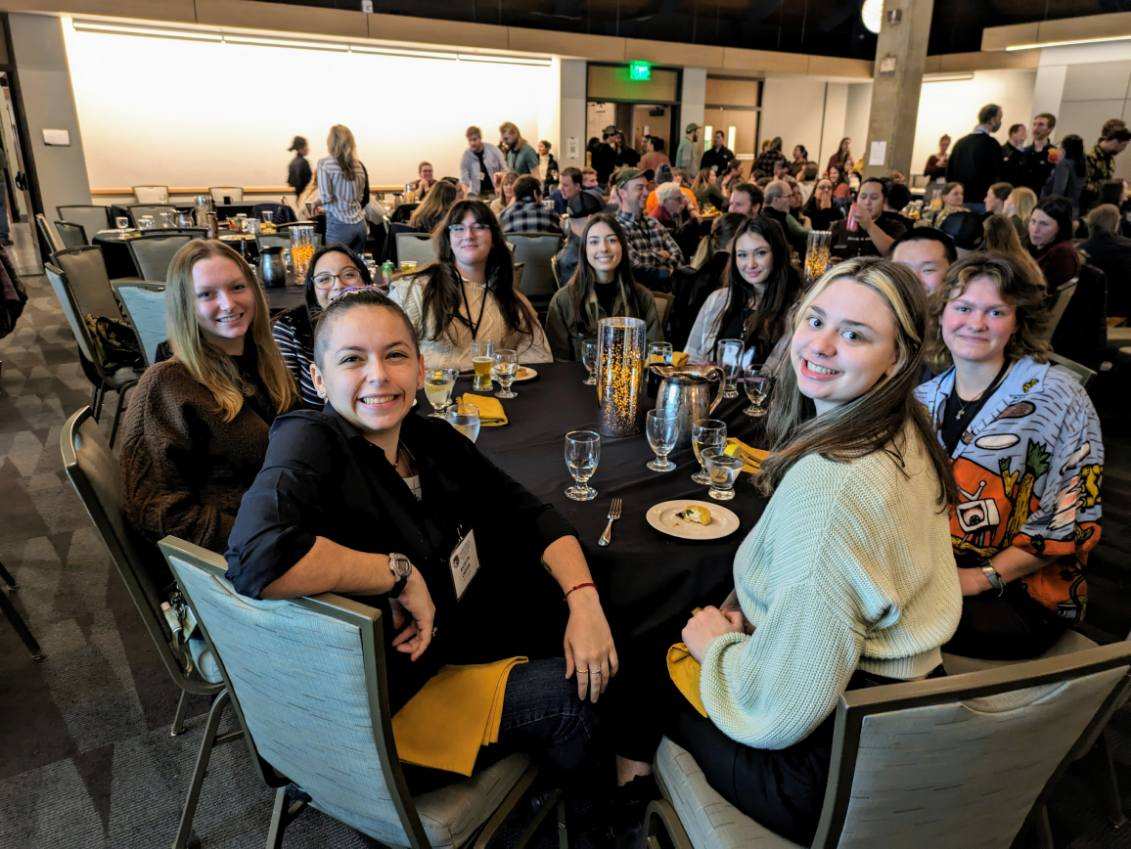
Participation is easy! During conference registration simply “Opt In” to the Mentorship Program, either as a Mentor (for professionals) or a Mentee (for students and early-career professionals). We encourage you to opt-in to this opportunity, which entails < 2 hours of time at the conference - everyone is welcome to participate!
This program is simple – before the conference, we connect each Mentor with a Mentee, and then that pair takes the reins and starts communicating with each other, emailing or talking at least once before the joint conference. Then at the conference, the Mentor-Mentee pair should meet at least twice.
Conversation topics could include questions or advice related to: current career or field of study, personal and professional interests, goals for the conference, career pathways, graduate study, wildlife employers and culture, to name a few.
After the conference, we’d encourage you to stay in contact with your Mentor or Mentee! We hope that Mentees will contact their Mentor within a month after the conference to follow up.
We hope that these conversations and connections can extend beyond the conference and help our Mentees establish a network in the wildlife profession. And remember, Mentees can learn a lot from their Mentors, as well!

THE ARTISTS' CORNER
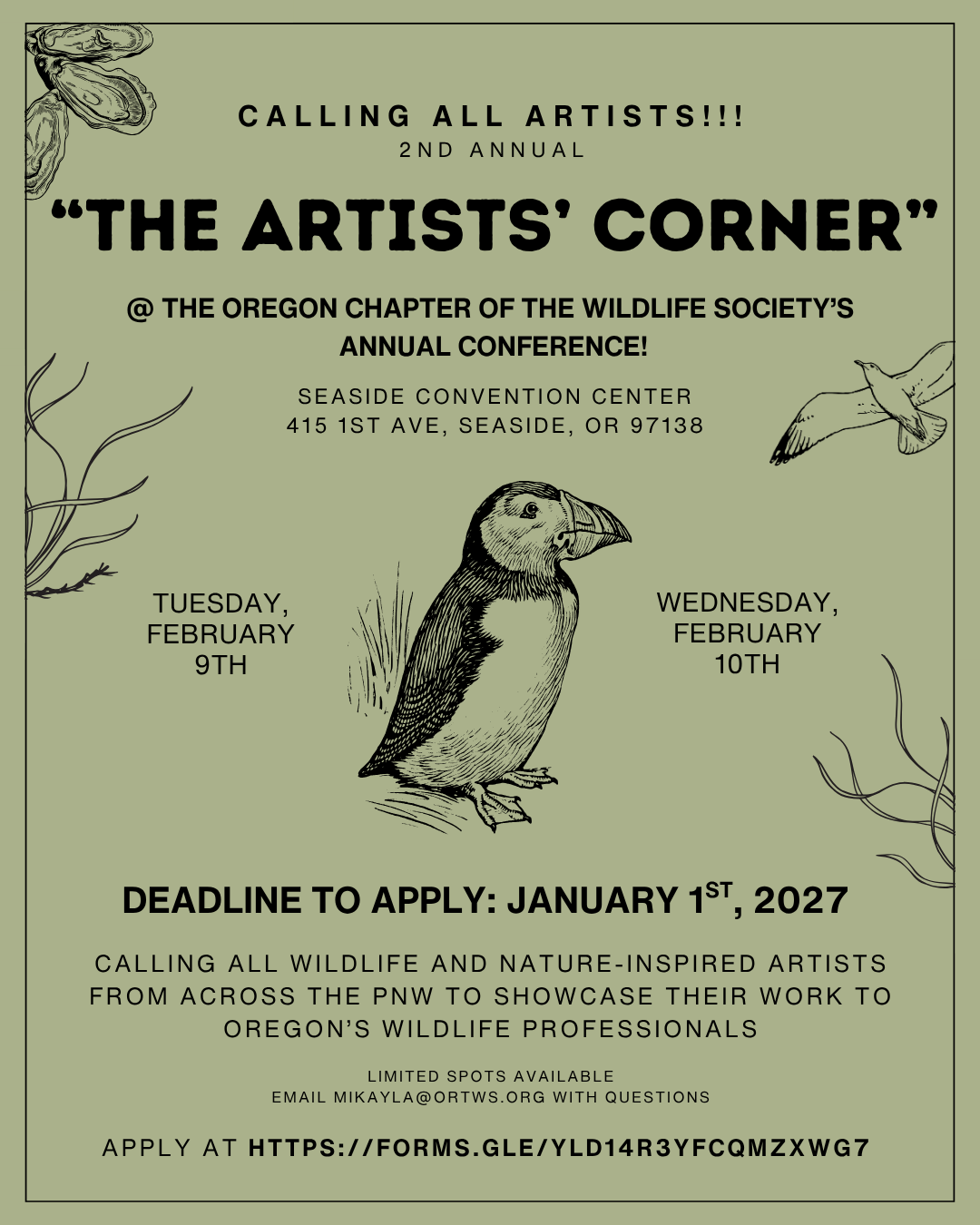
Apply no later than close of business January 1, 2027
The Oregon Chapter of The Wildlife Society is excited to host our second annual Artists’ Corner at the 2027 Annual Conference in at the Seaside Convention Center in Seaside, Oregon! We’re inviting wildlife and nature-inspired artists to showcase their work, connect with the conservation community, and share how art can inspire a deeper appreciation for our state’s incredible biodiversity. The Artists’ Corner will be held in conjunction with our annual conference on February 9th-11th, 2027. Artists will have the opportunity to display and sell their work during conference hours on February 9th and 10th.
Show hours are as follows:
February 9th from 2:30pm - 7:30pm
February 10th from 8:00am - 7:00pm
Each participating artist will be provided an indoor 10x10 ft space and is responsible for their own setup (tables, easels, walls, etc.). To help support our student scholarships and grant opportunities, we ask that each artist donate one piece to be included in our annual raffle and auction. There is no minimum donation requirement.
Due to limited space, this is a juried show.
IMPORTANT INFORMATION:
- The deadline to apply is January 1st, 2027.
- Each artist will have a 10x10 foot space.
- Artists are responsible for their own display setup and materials.
- One donated piece (print, cards, stickers etc.) is requested for our raffle/auction.
- The booth fee is $150. There is no application fee.
QUESTIONS please contact Mikayla Bivona Mikayla@ortws.org
CONFERENCE PHOTO, TRAIL CAMERA PHOTO, AND ART CONTESTS
Celebrate Oregon's wildlife and wild places by entering in our annual Photo Contest, Art Contest, or NEW Trail Camera Photo Contest! Submissions are open to all conference attendees and will be displayed and judged during the conference.
Photo contest: Six Categories
- Mammals
- Birds
- Reptiles/amphibians
- Fishes
- Plants & Fungi
- Landscape & Habitats
Art contest: Two categories
- 2D artwork
- 3D artwork
*NEW* Trail Camera Photo Contest: Five Categories
- Wildlife Behaviors
- Wildlife Portraits
- Action Shots
- Multi-species photos
- Wildlife Bloopers (Funny Photos)
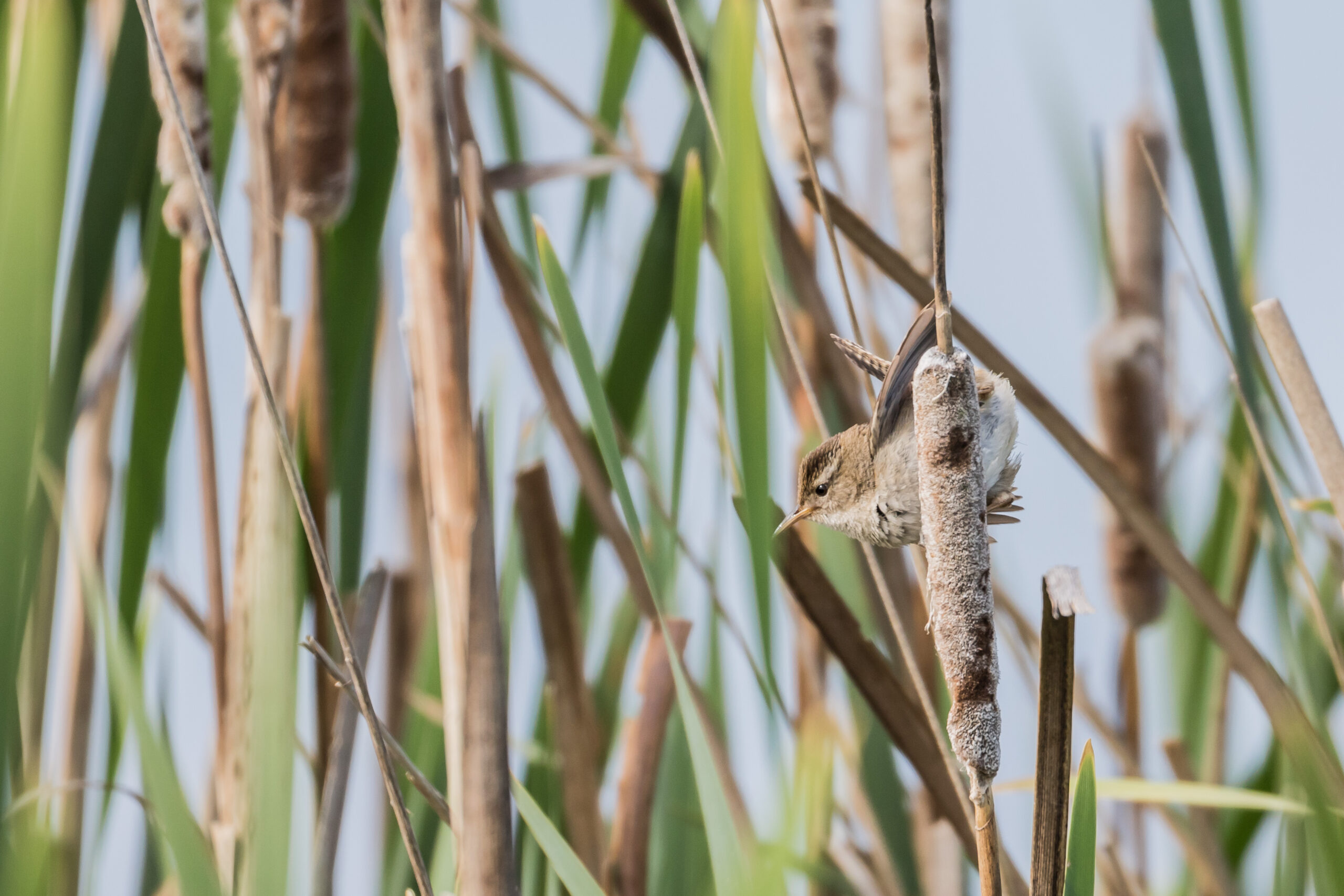
Submission Deadline: 4:20 PM, Tuesday, February 9th, 2027. Entries must be submitted at the Registration Desk during registration hours (7:30 AM - 4:20 PM).
Winners will be selected by ORTWS members and announced at the conference banquet. Gift card prizes will be awarded to winning photographers and artists.
2027 Conference Workshops Coming Soon!
SPECIAL THANKS TO OUR 2026 PLENARY SPEAKERS

Nicole DeCrappeo - Retired
Regional Administrator for the NW
Climate Adaptation Science Center

Taal Levi
Professor in Fisheries, Wildlife
and Conservation Sciences at OSU

Chanel Hason
Elakha Alliance
Director of Outreach & Community Relations
Thomas Stokely
The Nature Conservancy – Oregon
Thank you for making the 2026 joint conference amazing!
We are grateful to our speakers, partners, and attendees for their energy and contributions in creating such a meaningful experience. We look forward to staying connected and welcoming you to future events.